01
Find a subject to investigate
Identify physical ideas you want to understand better, then look at introductory physics, engineering or technology courses.
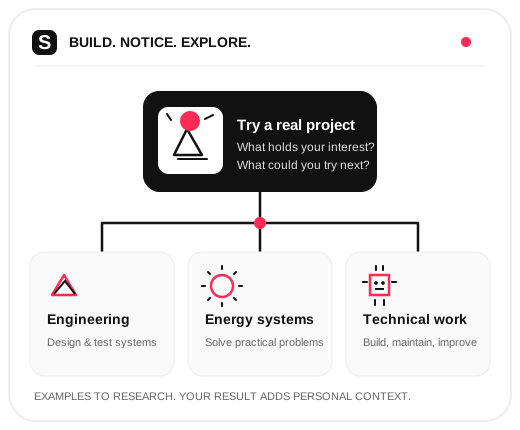
Enjoy figuring out why something moves, breaks or stays in balance? Try 70 visual problems, then use the experience to investigate engineering, energy systems and hands-on technical work.
A school subject and a job title do not tell the whole story. Notice whether you enjoy tracing a mechanism, checking a diagram and working through an unfamiliar problem. Those observations can guide what you try next.
Identify physical ideas you want to understand better, then look at introductory physics, engineering or technology courses.
Compare the test experience with building a small model, troubleshooting a device or observing a supervised workshop.
Your practice result joins the interest, major, values and work-style questionnaires in your combined StudyIndex report.
The diagrams cover familiar physical situations. The useful question is both how you approached them and whether you would enjoy learning more.
Trace connected parts and directions. Consider whether you enjoy this kind of reasoning enough to explore machines, transport or automation.
Look at where forces act and how a structure is supported. Follow up with a model bridge or a beginner design challenge.
Reason about fluids, pressure and temperature. Link unfamiliar ideas to what you could learn in school science.
Pay attention to contact, position and geometry. Compare that experience with a drawing, CAD or fabrication activity.
These original StudyIndex prompts show how to turn a physical principle into a career exploration activity. They are separate from the scored question bank.
Observe the supports and where the load acts, then compare one change at a time: shape, span or material. A supervised design experiment can reveal whether you enjoy testing an explanation.
Ask how compression and repeated motion affect temperature. Use a safe, supervised demonstration and record what changes. The goal is to connect an observation with a physical explanation.
You have 30 minutes for 70 questions. Each correct answer contributes one point. The final total describes this practice session; it is one piece of evidence alongside your interests and experience.
Use this alongside schoolwork, conversations with a counselor and a practical project. Engineering degrees, engineering technology programs and skilled technical routes have different entry requirements. Compare real curricula before narrowing your options.
It can add a useful experience to reflect on. Your interest in the work, preparation in relevant subjects, access to support and what you learn from projects also matter. Use the combined report to investigate several routes.
Choose one unfamiliar topic and try an introductory lesson or a supervised model-building activity. Notice what improves with explanation and practice. Revisit your career questions using that additional experience.
Possible starting points include engineering, engineering technology, energy-related programs and hands-on technical training. Check actual course content, credentials and entry requirements for the route that interests you.
You have 30 minutes to answer 70 illustrated questions. Each correct answer earns one point. After finishing, review the answers, choose a topic to practice and connect your result with technical careers and study programs.
Yes. StudyIndex remembers the result with this browser. Registering or signing in links available browser results to your account automatically, including through a configured social sign-in provider.
A connected parent can read the combined career report after the student approves access. A separate share link shows only this test summary, without the account name or individual answers.
Start the practice session, then connect what you noticed with the subjects and careers you want to research.